
Spring is officially here. April is an uplifting month when the Scots dust off winter and embrace sunnier, milder weather and blooming flowers (though snow-covered mountains might persist). This is an ideal time for taking an outdoorsy road trip broken up by hikes and coastal walks before the summer crowds arrive. Don’t miss the festival dedicated to whisky near Cairngorms National Park.
## Scotland in April: A Comprehensive Guide
April in Scotland presents a delightful paradox. While the rest of Europe is well into spring, Scotland retains a touch of the wild, unpredictable beauty that defines its character. It’s a month of surprising sunshine, fewer crowds, and the emergence of cheerful spring blossoms, offering an alluring combination for travelers seeking an authentic Scottish experience. The days are noticeably longer, affording ample opportunity to explore the diverse landscapes and vibrant cities that Scotland has to offer.
Of course, Scotland’s weather remains famously capricious, demanding a certain degree of preparedness and flexibility. The specific conditions you encounter will depend on the precise location of your travels. The western coast, influenced by westerly winds carrying temperate air from the North Atlantic, tends to be milder. In contrast, the higher altitudes of the Highlands might still display snow-capped peaks, remnants of the winter months.
Despite these regional variations, temperature ranges remain relatively consistent. In Edinburgh, the capital city, you can typically expect daily high temperatures to reach around 52°F (11°C), with lows hovering around 39°F (4°C). Further north, in the picturesque town of Portree on the enchanting Isle of Skye, average highs tend to be slightly warmer, reaching 54°F (12°C), while lows remain similar, around 41°F (5°C).
Given the unpredictable nature of the Scottish climate, it is advisable to pack accordingly. Preparing for a mix of sunshine, overcast skies, and the possibility of rain showers is essential, even in spring. The key to comfortable exploration is smart layering. Lightweight, easily packable layers allow you to adapt to changing conditions throughout the day. A waterproof jacket is an absolute must, providing protection from unexpected downpours, and sturdy, waterproof walking shoes are crucial for keeping your feet warm and dry while exploring the diverse terrains. Don’t forget essentials such as sunscreen and a hat for protection from the elements.
April falls within the shoulder season in Scotland, a sweet spot between the quiet winter months and the bustling summer peak. This translates to a wonderful opportunity to avoid the largest crowds and potentially secure off-season deals on accommodations and attractions. With fewer tourists, you’ll find yourself with more elbow room at popular sights, allowing for a more immersive and authentic experience. You’ll also enjoy greater flexibility in booking accommodations, tours, and transportation.
To maximize your chances of securing the best rates and availability, it’s recommended to book your trip well in advance, especially if your travel dates coincide with the Easter holiday. Consider travelling mid-week rather than on the weekend. Weekend periods often see increased demand, resulting in higher prices and reduced availability. The Easter period sees a surge in domestic travel around Scotland, so it is best to book early to avoid disappointment when securing accommodation and car rentals.
The welcome news for April travellers is that any attractions that may have temporarily closed for the winter season are likely to have reopened, offering a full range of experiences for visitors to enjoy. Museums, castles, and historical sites will be ready to welcome you and share the rich history and culture of Scotland.
Scotland is a remarkably compact country, occupying the northern half of Great Britain. It boasts a dramatic mainland coastline as well as over 900 offshore islands, each with its unique charm and appeal. Determining where to go in Scotland largely depends on the amount of time you have available. It’s helpful to envision Scotland divided into two distinct regions: the Highlands and the Lowlands.
Most visitors begin and end their Scottish adventure in the Lowlands, typically arriving in one of the country’s two major cities: Glasgow and Edinburgh. These cities are easily accessible by plane, train, or automobile, and the proximity of Glasgow and Edinburgh makes it easy to visit both, as they are located less than an hour apart by train. Each city offers a distinct flavour of Scottish culture and history.
If your time in Scotland is limited to just a few days, basing yourself in either Glasgow or Edinburgh and taking day trips is a practical and rewarding approach. Many of Scotland’s most iconic landmarks and attractions are within a few hours’ drive of these cities, including majestic castles, charming medieval towns, and sprawling national parks. For example, a full-day excursion from either city could take you to the northern Highlands, where you can hike through the stunning landscapes of Cairngorms National Park, explore the legendary shores of Loch Ness, and delve into the historical mysteries of Urquhart Castle, all before returning to your base for dinner.
For travellers with more extensive time to explore, embarking on a self-guided road trip with multiple stops is an excellent option. April offers the advantage of fewer crowds compared to the peak summer months, making road travel more enjoyable and less congested. Springtime is a particularly beautiful season to explore the west coast, where the landscapes are vibrant and green following the winter rains. Oban, a charming fishing town, serves as an ideal base for discovering some of the many offshore islands. Oban acts as a gateway to the Hebridean Islands, with frequent boat trips available to the enchanting isles of Iona, Mull, and Staffa.
Another enticing option is to drive north towards the iconic Isle of Skye, a dramatically scenic island renowned for its rugged landscapes and the colourful harbour town of Portree. The journey to the Isle of Skye can be just as rewarding as the destination itself. Consider driving through the breathtaking Glencoe Valley, widely regarded as one of Scotland’s most beautiful scenic routes. Along the way, you’ll have the opportunity to admire Ben Nevis, the highest peak in the United Kingdom.
Scotland’s east coast also offers a wealth of scenic road trip opportunities. In April, you’ll encounter spring wildflowers blooming along the coast, adding vibrant splashes of colour to the landscape. Discover historic castles, explore renowned distilleries, enjoy invigorating coastal walks, and indulge in restaurants serving fresh, locally caught seafood. Venture further north to reach Aberdeen, Scotland’s third-largest city, located in the Highlands. Alternatively, stay closer to Edinburgh and explore the charming harbour towns of Fife, with access to world-class golf courses, the historic Falkland Palace, and St Andrews, home to Scotland’s oldest university.
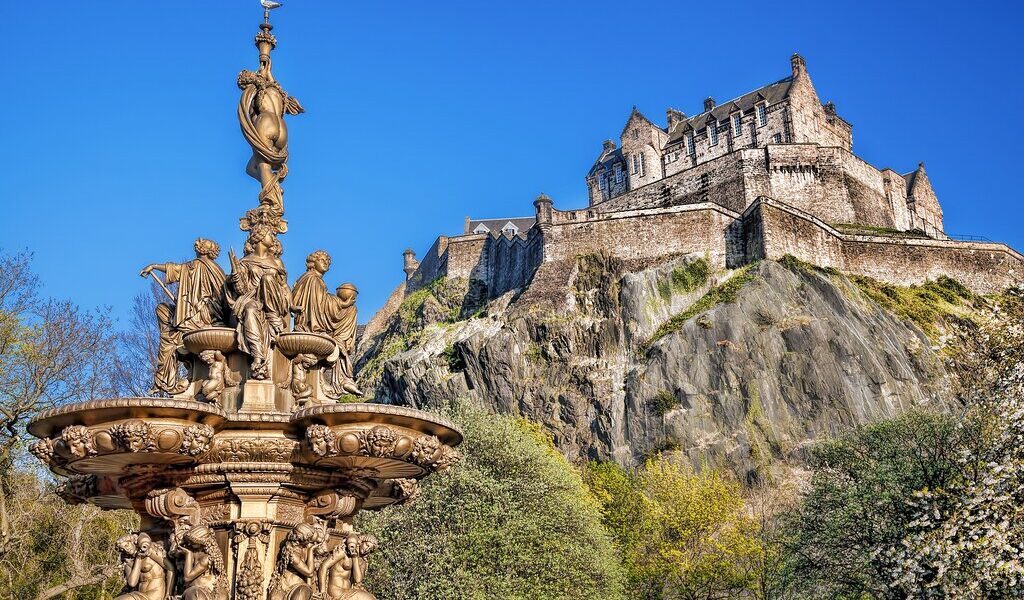
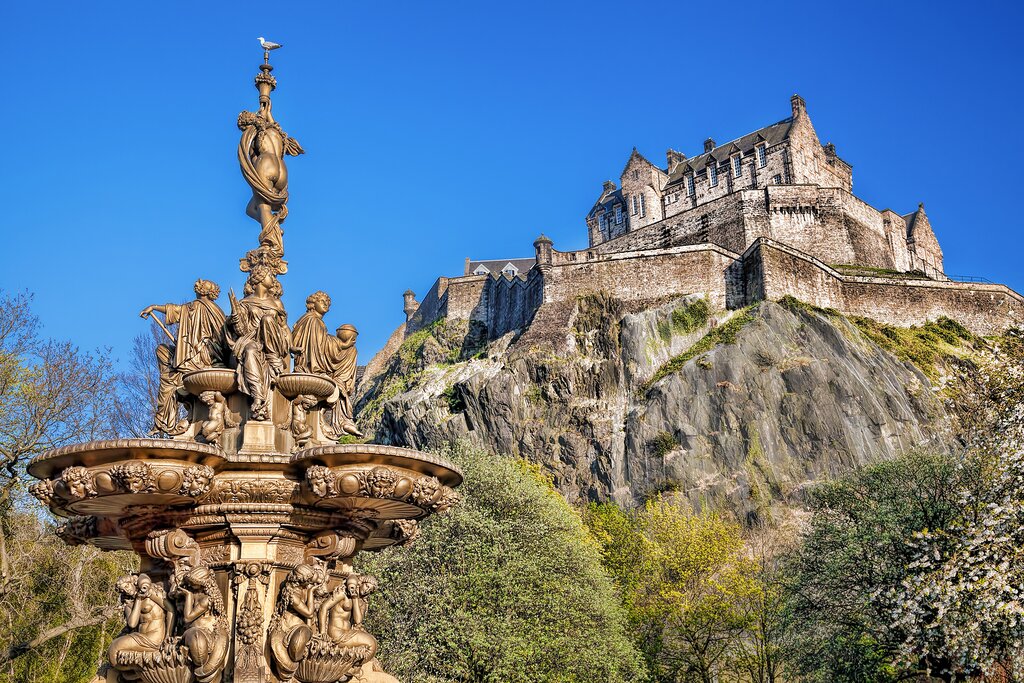
Scotland offers diverse options for activities. Start by exploring the hilly streets and parks of Edinburgh’s UNESCO-listed Old and New Towns. A stroll along the Royal Mile, a historic thoroughfare lined with parliaments, churches, and visitor attractions, provides an excellent introduction to the city’s rich history and culture. At one end of the Royal Mile stands Edinburgh Castle. You can climb Castle Hill and delve into the history of one of Europe’s oldest fortified places. At the other end is the 16th-century Palace of Holyroodhouse, conveniently situated near Holyrood Park, the largest green space in Edinburgh, encompassing 650 acres. Within Holyrood Park, you can hike to Arthur’s Seat, the city’s highest point. Enjoy spectacular panoramic views of Edinburgh’s iconic churches and medieval buildings.
Glasgow, Scotland’s biggest city, merits a day or two of exploration to fully appreciate its Victorian architecture, gentrifying neighbourhoods, and the numerous green spaces that dot the city. Take a relaxing walk or bike ride through Kelvingrove Park. After, immerse yourself in the free-of-charge Kelvingrove Museum and Art Gallery. The museum has 22 themed galleries with diverse collections.
April is an ideal time to rent a car. Explore Scotland’s countryside and coastline at your own pace, and see bluebells, primroses, and fields of yellow rapeseed. Scotland offers great options for walking, hiking, and biking. Experienced long-distance hikers can tackle the West Highland Way, a challenging 96-mile (154-km) trail stretching from Milngavie to Fort William. For a shorter, less demanding hike, head to Loch Lomond and the Trossachs National Park. Enjoy a half-day hike before continuing your journey west towards the islands.
If you have ample time, take a ferry to the Hebridean Islands. Create your own personalized itinerary with coastal hikes, bike rides, and sea kayaking tours. You can also discover historical gems and medieval castles. If you are a fan of seafood, pick up a Seafood Trail map which focuses on Scotland’s west coast featuring member restaurants. Scotland has several foodie trails with items like cheese, chocolate, and the Arbroath smokie, a locally smoked haddock famous on the east coast.
Whisky lovers will not have to travel far to find a tour or tasting. Visit the 18th-century Oban distillery on the mainland. Tour the Lagavulin distillery on the Isle of Islay that produces the island’s signature peaty flavour. Many brands are located in Speyside in the Highlands near Cairngorms National Park. After a day in the rugged mountains, reward yourself with tastings at The Glenlivet, The Macallan, and Glenfiddich. You can also visit the Speyside whisky festival at the end of the month.
Here are some events that you might want to check out in April:
Easter weekend takes place nationwide. Easter can occur in late March or April. Festivities kick off on Good Friday, a public holiday in Scotland, so expect closures. This is a weekend for families to spend time together and enjoy traditions like decorating and hunting Easter eggs. Sunday lunch might include roast lamb and a fruitcake with almond paste and marzipan called Simnel cake.
The Edinburgh Science Festival takes place in Edinburgh. Scotland’s capital delivers one of Europe’s largest science festivals each April. This event draws all ages who participate in a range of events, exhibitions, and activities around the Royal Botanical Garden.
The Beltane Fire Festival is in Edinburgh. On the last evening of April (April 30th), get tickets for this ancient Celtic festival on Calton Hill in Edinburgh to celebrate warmer, longer days in May. Look for costumes, bonfires, drums, and performances.
The Spirit of Speyside Whisky Festival takes place in Speyside. Malt whisky lovers might want to travel to this annual festival in northeast Scotland. The region of Speyside is known for its distilleries. Festival-goers will find tastings and food, music, and events centered around the region.